

As a dedicated supplier of firm silicone sponges, I've witnessed firsthand the frequent inquiries from clients about enhancing the firmness of these sponges. Silicone sponges, with their unique properties such as high - temperature resistance, flexibility, and chemical stability, are widely used in various industries, from automotive to electronics and medical devices. In this blog, I'll share some effective ways to make a firm silicone sponge even firmer, based on scientific principles and industry experience.
1. Material Selection
The initial step in getting a firmer silicone sponge begins with careful material selection. The base silicone rubber ingredients significantly impact the final firmness. There are two main types of silicone rubbers often used for sponge production: addition - cure and peroxide - cure silicone rubbers.
For addition - cure silicone rubbers, a higher cross - link density can lead to a firmer sponge. Manufacturers can choose raw materials with a greater number of reactive groups, which will form more cross - links during the curing process. This results in a more rigid and stable structure. When selecting addition - cure silicone rubbers, look for products with a high vinyl content. Vinyl groups react with the cross - linking agents to form a three - dimensional network, and a higher vinyl content means more cross - links can be formed.
Peroxide - cure silicone rubbers can also be adjusted to increase firmness. By using peroxides with a higher activity level, the cross - linking reaction can occur more vigorously, leading to a greater degree of cross - linking and thus a firmer sponge. Additionally, the quantity of the peroxide used can be adjusted. However, it should be noted that an excessive amount of peroxide may lead to over - curing and some negative effects on the mechanical properties of the silicone sponge, such as brittleness.
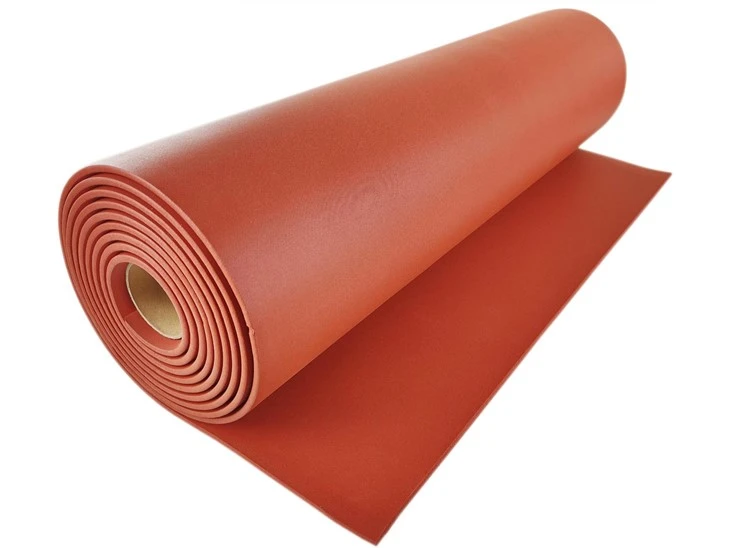

2. Altering the Cross - Linking Process
The cross - linking process is crucial for determining the firmness of the silicone sponge. There are several variables that can be manipulated in this stage to achieve a firmer product.
Temperature and Time
Temperature plays a vital role in the cross - linking reaction. A higher curing temperature generally accelerates the cross - linking process, leading to a more rapid formation of cross - links. When the silicone sponge is cured at an elevated temperature, the molecules have more energy to react, and a higher cross - link density can be achieved in a shorter time. For example, if a standard curing process for a silicone sponge is carried out at 150°C for 30 minutes, increasing the temperature to 180°C may reduce the curing time to 20 minutes and result in a firmer sponge. However, the temperature cannot be raised indefinitely, as extremely high temperatures can cause degradation of the silicone material.
The curing time is also an important factor. A longer curing time allows more cross - links to form, which can increase the firmness of the sponge. But there is a point of diminishing returns. After a certain period, additional curing time may not significantly increase the firmness and may instead cause unnecessary energy consumption and potential degradation of the material.
Catalyst Concentration
In the addition - cure silicone system, the catalyst is responsible for initiating the cross - linking reaction. Increasing the catalyst concentration can speed up the reaction rate and lead to a higher cross - link density. However, similar to the use of peroxides in the peroxide - cure system, an excessive amount of catalyst can cause problems such as uneven cross - linking and a reduction in the overall quality of the sponge. Manufacturers need to find the optimal catalyst concentration to balance the firmness improvement and the quality of the final product.
3. Incorporating Fillers
Fillers are substances added to the silicone sponge to modify its properties, including firmness. There are various types of fillers that can be used, each with its own characteristics.
Reinforcing Fillers
Silica is one of the most commonly used reinforcing fillers in silicone sponges. It has a high surface area and can interact with the silicone molecules, effectively increasing the cross - link density and the stiffness of the sponge. The addition of silica fillers can also improve the mechanical strength and tear resistance of the silicone sponge. The particle size of the silica filler matters. Smaller particle sizes generally provide better reinforcement due to their larger surface area, which allows for more interaction with the silicone matrix.
Another type of reinforcing filler is carbon black. Carbon black can enhance the conductivity and mechanical properties of the silicone sponge. When added in appropriate amounts, carbon black can increase the firmness of the sponge by forming a network structure within the silicone matrix.
Inert Fillers
Inert fillers such as calcium carbonate can also be used to increase the firmness of the silicone sponge. They can increase the volume and density of the sponge without participating in the chemical reaction. However, too much addition of inert fillers can lead to a decrease in the flexibility and other properties of the sponge. Therefore, the amount of inert fillers added needs to be carefully controlled.
4. Post - Treatment
After the initial production of the silicone sponge, post - treatment processes can also be employed to make it firmer.
Annealing
Annealing is a heat - treatment process where the silicone sponge is heated to a certain temperature and then cooled slowly. This process can relieve internal stresses in the sponge and promote the rearrangement of the silicone molecules, leading to a more ordered and stable structure. As a result, the firmness of the sponge can be improved. The annealing temperature and time depend on the type of silicone rubber and the specific requirements of the product.
Compression Set Improvement
By subjecting the silicone sponge to a controlled compression - set test and heat - fixing it in the compressed state, the sponge can develop a more permanent deformation resistance. This process can enhance the firmness and shape - retention ability of the silicone sponge. When the sponge is compressed and heated, the cross - links are adjusted to maintain the compressed shape, and the overall structure becomes more rigid.
Applications of Firm Silicone Sponges
Firm silicone sponges have a wide range of applications due to their excellent properties. The High Temperature Silicone Gasket is a typical example. In high - temperature environments, such as in engines or industrial furnaces, the firm silicone sponge can provide effective sealing, preventing leaks and ensuring the proper operation of the equipment.
The Silicone Sponge For Heating Pad is another important application. The firmness of the silicone sponge allows it to maintain its shape and provide support for the heating elements. At the same time, its flexibility can still ensure comfort when in contact with the human body.
In the field of mechanical engineering, the Mechanical Seal For High Temperature made of firm silicone sponges can withstand high - temperature and high - pressure conditions, providing reliable sealing for pumps and other mechanical devices.
Conclusion
In summary, making a firm silicone sponge even firmer involves a comprehensive approach that includes careful material selection, optimization of the cross - linking process, incorporation of appropriate fillers, and effective post - treatment. Each method has its own advantages and limitations, and manufacturers need to make a trade - off based on the specific requirements of the final product.
If you are interested in high - quality firm silicone sponges or have any questions about improving their firmness, we're here to help. Feel free to contact us to start a procurement discussion. Our team of experts can provide personalized solutions tailored to your needs.
References
- Mark, J. E., & Erman, B. (2007). Science and Technology of Rubber. Academic Press.
- Brydson, J. A. (1999). Plastics Materials (7th ed.). Butterworth - Heinemann.
- Canevarolo, S. V. (1991). The Science and Technology of Rubber. Academic Press.