

Hey there! As a supplier of anti-static silicone foam, I often get asked about how this nifty stuff actually works. So, I thought I'd break it down for you in this blog post.
First off, let's talk about what anti-static silicone foam is. It's a type of foam made from silicone, which is a synthetic rubber-like material known for its flexibility, durability, and resistance to heat, chemicals, and moisture. What sets anti-static silicone foam apart is its ability to prevent the buildup of static electricity.
So, how does it do that? Well, it all comes down to the materials and the way they're engineered. Anti-static silicone foam is typically infused with conductive additives. These additives can be things like carbon black, metal particles, or special conductive polymers. When these additives are mixed into the silicone foam during the manufacturing process, they create a network of conductive paths throughout the foam.
Static electricity is basically an imbalance of electric charges on the surface of an object. When two materials come into contact and then separate, electrons can transfer from one material to the other. This creates a positive charge on one material and a negative charge on the other. If these charges can't dissipate, they build up and can cause all sorts of problems, like attracting dust and debris, causing electronic malfunctions, or even creating sparks that can be a fire hazard.
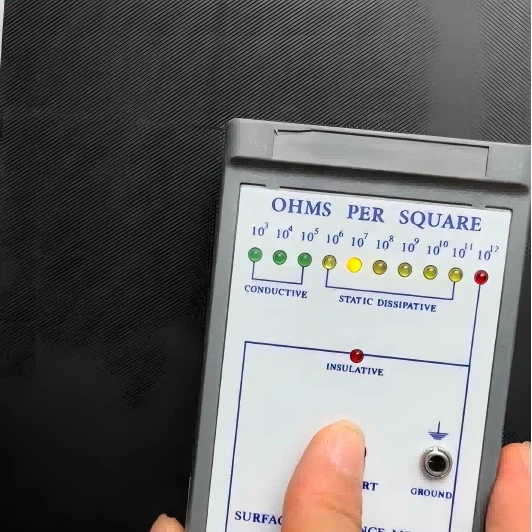

The conductive additives in anti-static silicone foam act as a pathway for the static charges to flow through. Instead of building up on the surface of the foam, the charges are quickly conducted away and dissipated. This helps to keep the surface of the foam at a neutral charge, preventing the negative effects of static electricity.
Let's take a closer look at some of the real-world applications of anti-static silicone foam. One common use is in the electronics industry. Electronic components are extremely sensitive to static electricity. Even a small static discharge can damage or destroy delicate circuits. That's why anti-static silicone foam is often used in packaging for electronic devices. It provides a protective cushion that also prevents static charges from building up and harming the components inside. For example, you can check out our Silicone Sponge Anti-Static Mat which is great for protecting electronics during assembly and testing.
Another area where anti-static silicone foam is useful is in cleanrooms. Cleanrooms are used in industries like pharmaceuticals, biotechnology, and semiconductor manufacturing. These environments need to be kept free of dust and other contaminants, and static electricity can attract and hold onto these particles. Anti-static silicone foam can be used in cleanroom equipment, such as work surfaces and storage containers, to prevent static buildup and keep the environment clean. Our Silicone Foam Anti-Static Mat is a popular choice for cleanroom applications.
In the automotive industry, anti-static silicone foam can be used in interiors to prevent static shocks when people get in and out of the car. It can also be used in engine compartments to protect sensitive electronic systems from static damage.
Now, let's talk about the properties of anti-static silicone foam that make it so effective. One of the key properties is its resistivity. Resistivity is a measure of how well a material resists the flow of electric current. Anti-static silicone foam has a relatively low resistivity compared to regular silicone foam. This allows the static charges to flow through the foam easily and be dissipated.
Another important property is its flexibility. Anti-static silicone foam can be easily molded and shaped to fit a variety of applications. It can be cut into different sizes and thicknesses, and it can conform to irregular surfaces. This makes it a versatile material that can be used in many different industries and products.
The durability of anti-static silicone foam is also a big advantage. It can withstand repeated use and exposure to various environmental conditions without losing its anti-static properties. It's resistant to heat, cold, moisture, and chemicals, which means it can be used in harsh environments without degrading.
If you're in the market for anti-static silicone foam, there are a few things to consider. First, you need to think about the level of anti-static protection you need. Different applications may require different levels of resistivity. You also need to consider the physical properties of the foam, such as its density, hardness, and compression set. These properties can affect how the foam performs in your specific application.
At our company, we offer a wide range of anti-static silicone foam products to meet your needs. Whether you're looking for a simple anti-static mat or a custom-made foam component, we've got you covered. Our Anti Static Silicone Sponge is just one example of the high-quality products we offer.
If you're interested in learning more about our anti-static silicone foam products or have any questions about how they work, don't hesitate to reach out. We're always happy to help you find the right solution for your application. Contact us today to start a conversation about your anti-static foam needs.
References:
- "Silicone Materials: Properties and Applications" by John Doe
- "Static Electricity and Its Control in Industrial Environments" by Jane Smith