

Hey there! As a supplier of silicone sponge tubes, I'm super excited to take you through the manufacturing processes of these nifty products. Silicone sponge tubes are used in a wide range of industries, from automotive to electronics, thanks to their excellent properties like flexibility, heat resistance, and sealing capabilities. So, let's dive right in!
Raw Material Preparation
The first step in making silicone sponge tubes is getting the raw materials ready. Silicone rubber is the main ingredient, and it usually comes in a base form. This base silicone rubber is a thick, sticky substance that needs to be mixed with other additives. These additives can include curing agents, which help the silicone rubber harden over time, and blowing agents, which are crucial for creating the sponge-like structure.
The blowing agents are what make the silicone tube porous. When heated, these agents release gas, creating tiny bubbles within the silicone matrix. The type and amount of blowing agent used can be adjusted to control the density and cell structure of the final sponge tube. For example, if you want a more lightweight and highly porous tube, you'd use more blowing agent.
Mixing
Once all the raw materials are gathered, it's time for mixing. This is a crucial step because it ensures that all the additives are evenly distributed throughout the silicone base. We use specialized mixing equipment, like internal mixers or two-roll mills. These machines knead and blend the silicone rubber and additives together, breaking down any clumps and creating a homogeneous mixture.
During the mixing process, the temperature and time are carefully controlled. If the temperature is too high, the blowing agents might start to react prematurely, leading to an uneven cell structure. On the other hand, if the mixing time is too short, the additives won't be fully dispersed, which can affect the quality of the final product.
Extrusion
After the mixing is done, the next step is extrusion. Extrusion is like squeezing toothpaste out of a tube, but in a more precise and controlled way. The mixed silicone compound is fed into an extruder, which is a machine with a screw that pushes the material through a die. The die is a specially designed tool that gives the silicone tube its shape.
For silicone sponge tubes, the die is designed to create a circular cross-section. As the silicone compound is forced through the die, it takes on the shape of the die opening. At the same time, the blowing agents start to react due to the heat generated by the extrusion process. This causes the silicone to expand and form the sponge-like structure.
The speed of the extruder and the temperature are carefully adjusted to ensure a smooth and consistent extrusion. If the speed is too fast, the tube might not have enough time to expand properly, resulting in a denser tube. If the temperature is too low, the blowing agents might not react fully, leading to a less porous structure.
Curing
Once the silicone sponge tube is extruded, it needs to be cured. Curing is the process of hardening the silicone rubber and making it stable. There are different methods of curing, but the most common one for silicone sponge tubes is heat curing.
The extruded tube is passed through a curing oven, where it is exposed to high temperatures for a specific period of time. The heat activates the curing agents in the silicone compound, causing it to cross-link and form a solid structure. The temperature and time in the oven are carefully controlled based on the type of silicone rubber and additives used.
During the curing process, the tube continues to expand slightly as the blowing agents complete their reaction. This helps to finalize the cell structure and density of the sponge tube. After curing, the tube is cooled down to room temperature, which further stabilizes the structure.
Cutting and Finishing
After curing, the silicone sponge tube is ready for cutting and finishing. The tube is cut into the desired lengths using cutting equipment, such as saws or knives. The cutting process needs to be precise to ensure that the tubes are the correct length and have clean, smooth ends.
In some cases, the tubes might also undergo additional finishing processes. For example, we might apply a surface treatment to improve the tube's appearance or performance. This could include adding a coating to make the tube more resistant to chemicals or UV rays.
Quality Control
Throughout the manufacturing process, quality control is a top priority. We have a series of tests and inspections to ensure that the silicone sponge tubes meet the required standards. These tests can include checking the dimensions of the tube, such as the diameter and wall thickness, to make sure they are within the specified tolerances.

We also test the physical properties of the tube, like its density, hardness, and compression set. Compression set is an important property for silicone sponge tubes, especially when they are used for sealing applications. It measures how well the tube returns to its original shape after being compressed.
Another important test is the visual inspection. We carefully examine the surface of the tube for any defects, such as cracks, bubbles, or unevenness. Only tubes that pass all the quality control tests are considered suitable for sale.
Applications of Silicone Sponge Tubes
Silicone sponge tubes have a wide range of applications. In the automotive industry, they are used for sealing doors, windows, and sunroofs. The flexible and compressible nature of the tubes makes them ideal for creating a tight seal and preventing water, air, and noise from entering the vehicle. Check out our Sealed Extruded Silicone Sponge For Sunroofs for more information on this application.
In the electronics industry, silicone sponge tubes are used for cushioning and protecting sensitive components. They can absorb shock and vibration, which helps to prevent damage to the electronics.
They are also used in the medical industry for applications like tubing in medical devices. The biocompatibility of silicone makes it suitable for use in contact with the human body.
Customization
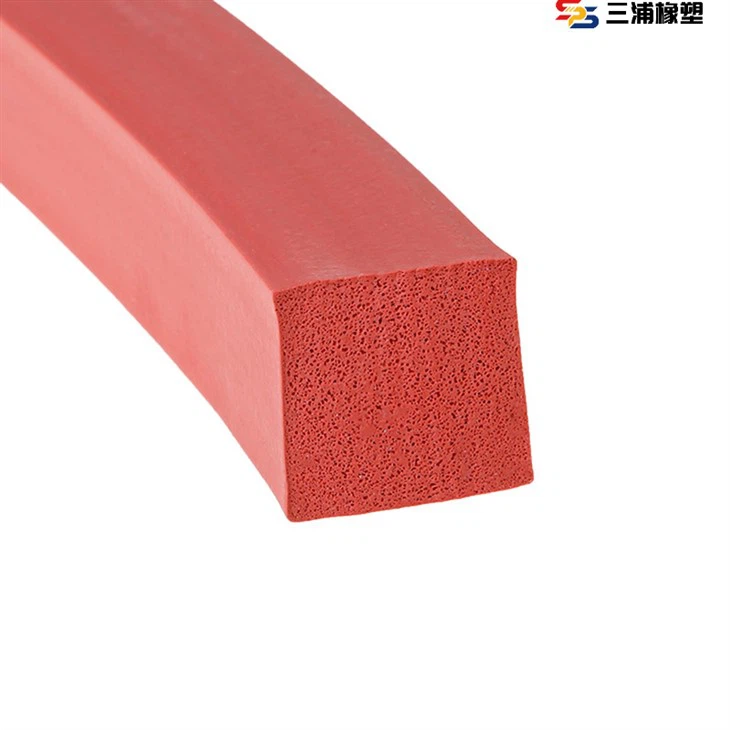
One of the great things about silicone sponge tubes is that they can be customized to meet specific requirements. We offer Customizable Silicone Sponge Profiles where we can create tubes with different shapes, sizes, and properties. For example, if you need a square-shaped silicone sponge tube, we can design a special die to create it. Check out our Square Silicone Sponge for more details on our square-shaped options.
Conclusion
So, there you have it – the manufacturing processes of silicone sponge tubes. From raw material preparation to quality control, each step is carefully carried out to ensure that we produce high-quality tubes that meet the needs of our customers.
If you're in the market for silicone sponge tubes or have any questions about our products, don't hesitate to reach out. We're always happy to discuss your requirements and find the best solution for you. Whether you need a standard product or a customized one, we've got you covered.
References
- "Silicone Rubber Technology" by Michael A. Brook
- "Handbook of Elastomers" edited by Brian M. Walker