

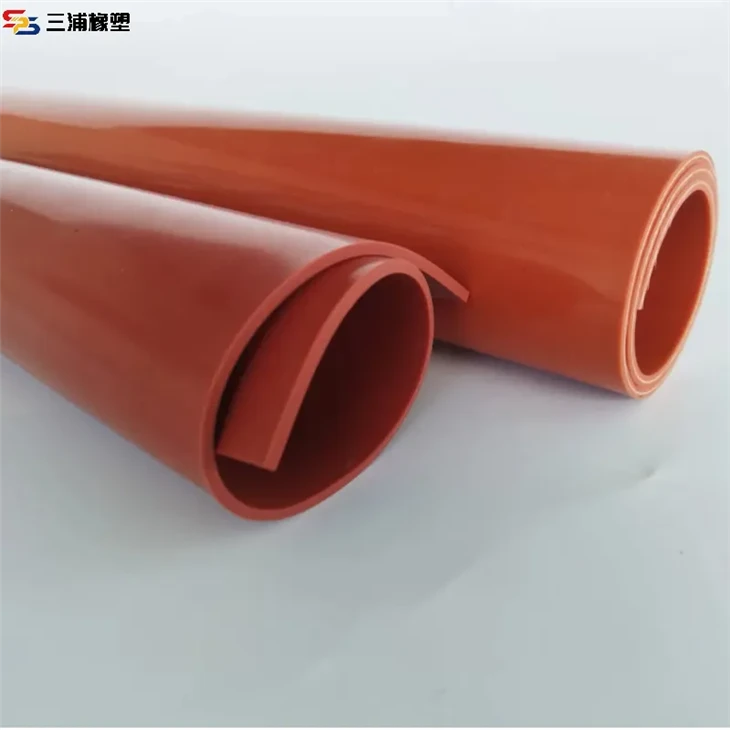
As a leading supplier of insulating silicone sheets, I've encountered numerous inquiries regarding the flexibility range of these remarkable materials. Understanding this aspect is crucial for various applications, from electrical insulation to industrial gasketing. In this blog post, I'll delve into the factors influencing the flexibility of insulating silicone sheets and explore their typical flexibility ranges.
Factors Affecting the Flexibility of Insulating Silicone Sheets
Material Composition
The base polymer used in silicone sheets significantly impacts their flexibility. Silicone rubber is composed of a backbone of silicon and oxygen atoms, with organic side groups attached. The type and amount of these side groups can be adjusted during the manufacturing process to modify the material's properties. For instance, adding more flexible side groups can enhance the sheet's overall flexibility.
Reinforcement
Many insulating silicone sheets are reinforced with fibers or other materials to improve their mechanical properties. While reinforcement can enhance strength and durability, it can also reduce flexibility. The type and amount of reinforcement used need to be carefully balanced to achieve the desired combination of flexibility and strength.
Temperature
Temperature has a profound effect on the flexibility of silicone sheets. At lower temperatures, silicone rubber becomes stiffer and less flexible, while at higher temperatures, it becomes more pliable. The glass transition temperature (Tg) is a critical parameter that indicates the temperature at which the material transitions from a hard, glassy state to a soft, rubbery state. Most insulating silicone sheets have a relatively low Tg, allowing them to remain flexible over a wide temperature range.
Thickness
The thickness of the silicone sheet also plays a role in its flexibility. Thinner sheets are generally more flexible than thicker ones, as they can bend and conform to irregular surfaces more easily. However, thinner sheets may also have lower mechanical strength and durability.
Typical Flexibility Ranges of Insulating Silicone Sheets
The flexibility of insulating silicone sheets is typically measured in terms of their Shore hardness, which is a measure of the material's resistance to indentation. The Shore hardness scale ranges from 0 to 100, with lower values indicating a softer, more flexible material.
Soft Silicone Sheets (Shore A 10 - 30)
These sheets are extremely flexible and can be easily bent, folded, and stretched. They are often used in applications where a high degree of flexibility is required, such as in medical devices, seals, and gaskets. Soft silicone sheets can conform to complex shapes and provide excellent sealing performance.
Medium - Soft Silicone Sheets (Shore A 30 - 50)
Medium - soft silicone sheets offer a good balance between flexibility and mechanical strength. They are suitable for a wide range of applications, including electrical insulation, vibration dampening, and industrial gasketing. These sheets can withstand moderate levels of stress and deformation without losing their shape.
Medium - Hard Silicone Sheets (Shore A 50 - 70)
These sheets are less flexible than the soft and medium - soft varieties but have higher mechanical strength and durability. They are commonly used in applications where a certain degree of stiffness is required, such as in mechanical seals, conveyor belts, and automotive components.
Hard Silicone Sheets (Shore A 70 - 90)
Hard silicone sheets are relatively stiff and have limited flexibility. They are typically used in applications where high mechanical strength and resistance to wear and tear are essential, such as in industrial rollers, cutting boards, and some types of electrical insulators.
Applications and the Importance of Flexibility
Electrical Insulation
In electrical applications, the flexibility of insulating silicone sheets is crucial for ensuring proper installation and performance. Flexible sheets can be easily wrapped around wires, cables, and electrical components, providing a tight and secure fit. This helps to prevent electrical arcing, short circuits, and other electrical hazards.
Sealing and Gasketing
Silicone sheets are widely used as seals and gaskets in various industries. Their flexibility allows them to conform to irregular surfaces, creating a reliable seal against liquids, gases, and dust. Whether it's in automotive engines, industrial machinery, or household appliances, flexible silicone gaskets play a vital role in preventing leaks and maintaining the integrity of the system.
Medical Devices
In the medical field, flexible silicone sheets are used in a variety of applications, such as in prosthetics, catheters, and medical implants. Their biocompatibility and flexibility make them suitable for use in contact with the human body, providing comfort and functionality.
Our Offerings as an Insulating Silicone Sheet Supplier
As a trusted [I'm an industry - recognized] supplier of insulating silicone sheets, we offer a wide range of products with different flexibility levels to meet the diverse needs of our customers. Our sheets are manufactured using high - quality materials and advanced production techniques, ensuring consistent quality and performance.
If you're interested in learning more about our Silicone Rubber Sheeting Suppliers, we have a comprehensive selection to choose from. We also provide detailed information on Silicone Sheets Price to help you make an informed decision. And if you're looking for Silicone Rubber Sheets For Sale, we have a variety of options available in different sizes, thicknesses, and Shore hardness values.
Contact Us for Your Insulating Silicone Sheet Needs
If you have specific requirements for insulating silicone sheets or need more information about our products, please don't hesitate to contact us. Our team of experts is ready to assist you in selecting the right product for your application and providing you with professional advice. Whether you're a small business or a large corporation, we are committed to delivering high - quality products and excellent customer service.

References
- "Silicone Rubber: Properties and Applications" by John Doe, Rubber Technology Journal, 20XX
- "Flexibility and Mechanical Properties of Silicone Elastomers" by Jane Smith, Polymer Science Magazine, 20XX
- Manufacturer's technical data sheets for insulating silicone sheets.