

1. Molded silicone foam: One-step molding method
Molded silicone rubber foaming is an "integrated" process.
Its foaming process and product shaping process are completed at the same time and in the same set of molds. The core process: The solid silicone raw materials that have been mixed and contain chemical foaming agents are precisely weighed and then placed in high-temperature metal molds. After the mold is closed, pressurized and heated, two reactions occur simultaneously: vulcanization (cross-linking) : The molecular chains of the silicone gel cross-link, transforming from raw rubber to mature rubber and gaining elasticity. Foaming: Chemical foaming agents decompose when heated, generating gas. The gas is wrapped by the vulcanized silica gel, forming a large number of tiny closed-cell holes inside.
Key features: Dense skin layer: As the silicone comes into direct contact with the high-temperature mold surface, the outer layer rapidly vulcanizes to form a very smooth, dense, and basically non-foamed "skin". This layer of skin ensures that the molded foamed parts have a good appearance quality, a smooth touch, and excellent sealing and wear resistance.
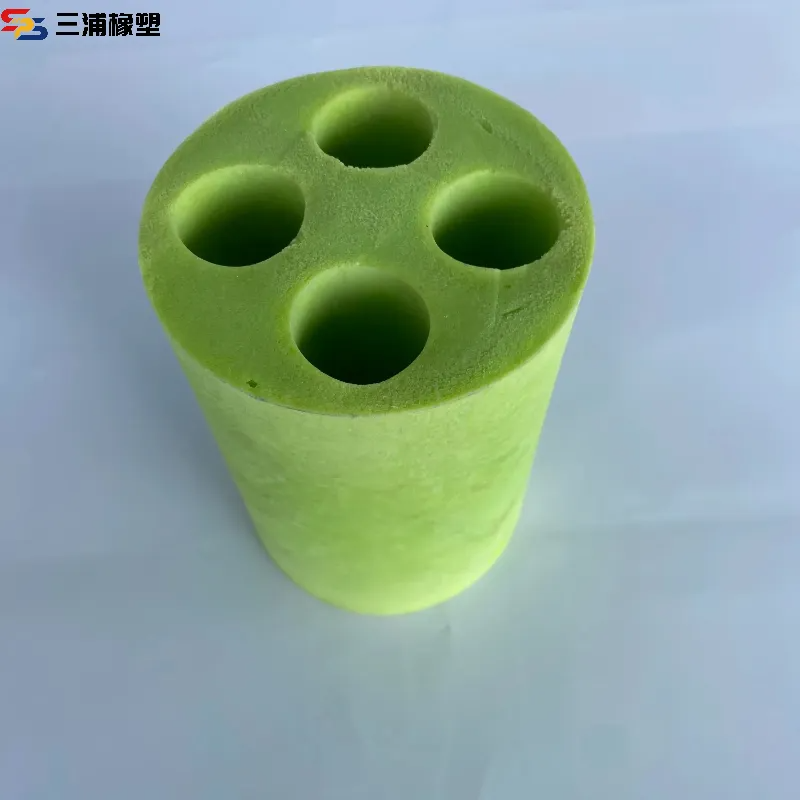
Complex three-dimensional structures: It is possible to directly manufacture products with complex three-dimensional structures such as concave-convex, snap-fit, and irregular curved surfaces, which are integrally formed without seams. Efficiency and cost: Suitable for mass production, with high efficiency per piece. However, precise metal molds need to be made, and the initial mold cost is very high, so it is not suitable for small-batch production.
In simple terms, molding foaming is the process of making "a molded foam part with a skin".
2.Conventional Silicone Rubber foaming : Two-step method
Conventional silicone foaming is a "step-by-step" process. It first produces semi-finished products (foamed boards or rolls), and then processes them into final products as needed.
Core process:
Step one: Manufacturing foamed substrate. Through equipment such as calendering machines, silicone materials containing foaming agents are continuously processed into foam boards or rolls. This process produces continuous and uniformly thick "silicone foam rolls".
Step Two: Secondary processing. According to customer requirements, these foamed boards are punched, CNC engraved or molded to form the required shapes (such as gaskets, sealing strips, etc.).
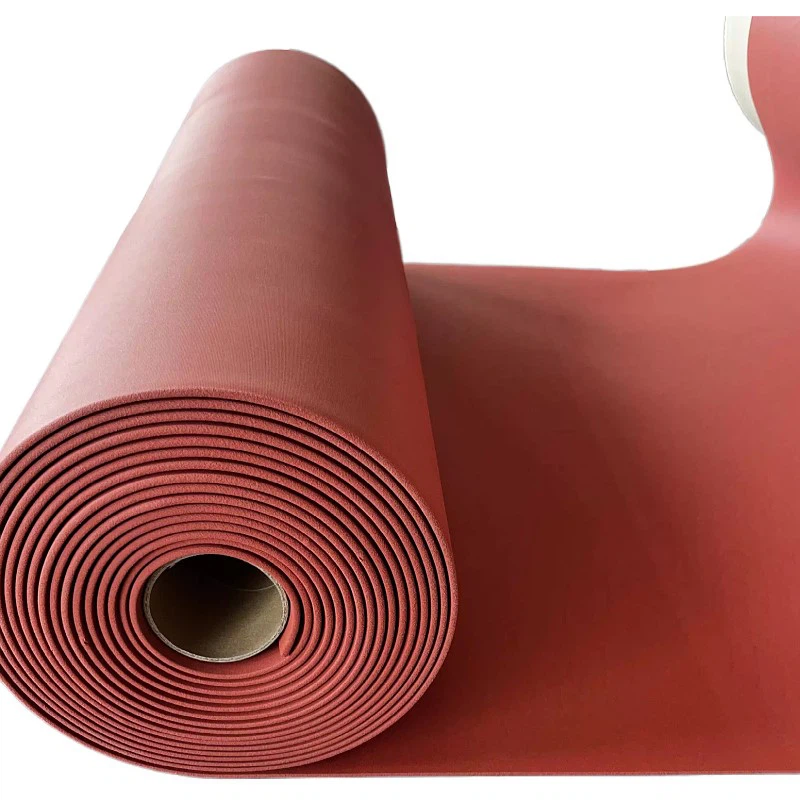
Key features:
Porous cross-section: The product surface is a cross-section of foam, featuring an open porous structure without the dense skin layer found in the molding process. Therefore, its sealing performance and appearance texture are not as good as those of molded parts. Simple shape: Mainly produces flat or simple curved surface parts (such as gaskets). It is extremely difficult to manufacture complex three-dimensional parts, and there is a significant waste of materials.
Efficiency and cost: It is highly suitable for small-batch and multi-variety production as only die-cutting is required, with a low initial investment cost (no need for expensive 3D molds). The foamed boards produced by large factories have very uniform and stable performance.