

Hey there! As a silicone sponge supplier, I often get asked about how silicone sponge resists UV radiation. It's a pretty cool topic, and I'm excited to share some insights with you.
First off, let's talk about what UV radiation is. UV, or ultraviolet, radiation is a type of energy that comes from the sun. It's divided into three types: UVA, UVB, and UVC. UVC is mostly absorbed by the Earth's atmosphere, so we don't have to worry too much about it. But UVA and UVB can reach the Earth's surface and cause all sorts of problems, like skin aging, sunburns, and even skin cancer in humans. For materials like silicone sponge, UV radiation can lead to degradation, which means the material starts to break down over time.
So, how does silicone sponge manage to resist this harmful radiation? Well, it all comes down to its chemical structure. Silicone sponge is made up of a polymer chain, which is basically a long string of molecules. In the case of silicone, these molecules contain silicon, oxygen, carbon, and hydrogen atoms. The silicon-oxygen bonds in silicone are really strong. They have a high bond energy, which means it takes a lot of energy to break them apart. UV radiation doesn't have enough energy to easily break these silicon-oxygen bonds, so the polymer chain remains intact.
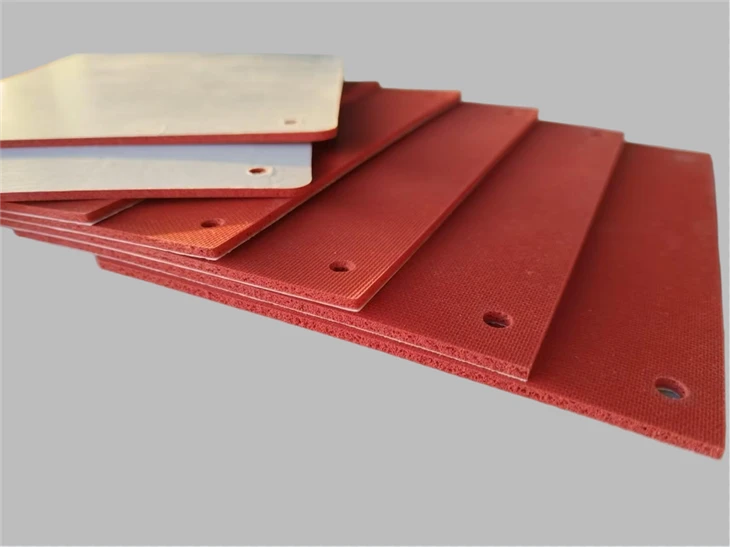

Another factor is the addition of certain additives. We often add UV stabilizers to our silicone sponge products. These stabilizers work in a few different ways. Some of them absorb the UV radiation and convert it into heat, which is then dissipated. This way, the energy from the UV rays doesn't cause damage to the silicone structure. Others act as scavengers, which means they react with the free radicals that are formed when the silicone is exposed to UV radiation. Free radicals are unstable molecules that can cause further damage to the material, but the scavengers neutralize them before they can do any harm.
Let me give you an example of how effective this can be. We've had customers who use our Silicone Rubber Sponge Sheet for outdoor applications. This sheet is exposed to the sun's UV rays day in and day out. But even after years of use, it still maintains its physical properties. It doesn't become brittle or lose its elasticity, which is a clear sign that it's resisting the UV radiation well.
Our High Temp Silicone Foam Sheet is another great product in this regard. It's designed to withstand high temperatures as well as UV exposure. The combination of the strong silicone structure and the UV stabilizers makes it a top choice for applications where both heat and UV are factors. Whether it's in automotive parts that are exposed to the sun or in industrial settings where there's outdoor equipment, this foam sheet holds up really well.
The High Temp Silicone Foam is also worth mentioning. It has a unique cellular structure that provides additional protection against UV radiation. The cells in the foam act as a sort of barrier, reducing the amount of UV that reaches the inner parts of the material. This, combined with the UV stabilizers and the strong silicon-oxygen bonds, makes it highly resistant to UV degradation.
Now, you might be wondering about the testing we do to ensure the UV resistance of our products. We conduct a series of tests in our lab. One of the most common tests is the accelerated weathering test. In this test, we expose the silicone sponge samples to a high-intensity UV light source for a set period of time. We then measure the changes in the material's properties, such as its hardness, tensile strength, and color. If the changes are within an acceptable range, we know that the product will perform well in real-world outdoor conditions.
We also keep an eye on industry standards and regulations. There are specific standards for UV resistance in different applications, and we make sure our products meet or exceed these standards. This way, you can be confident that when you choose our silicone sponge, you're getting a high-quality product that will last.
If you're in the market for silicone sponge products that can resist UV radiation, we've got you covered. Whether you need it for a small DIY project or a large industrial application, we have a wide range of options to choose from. Our team of experts is always ready to help you find the right product for your needs. So, don't hesitate to reach out if you have any questions or if you're interested in starting a purchase. We're here to make the process as easy and smooth as possible for you.
In conclusion, silicone sponge's ability to resist UV radiation is due to its strong chemical structure and the addition of UV stabilizers. Our products, like the Silicone Rubber Sponge Sheet, High Temp Silicone Foam Sheet, and High Temp Silicone Foam, are designed to provide long-lasting performance even in harsh outdoor environments. If you're looking for a reliable silicone sponge supplier, we'd love to have a chat with you about your requirements.
References
- "Silicone Polymers" by John C. Saam, published in the Encyclopedia of Polymer Science and Technology.
- "UV Stabilization of Polymers: Principles and Applications" by Gijsbertus de With.