

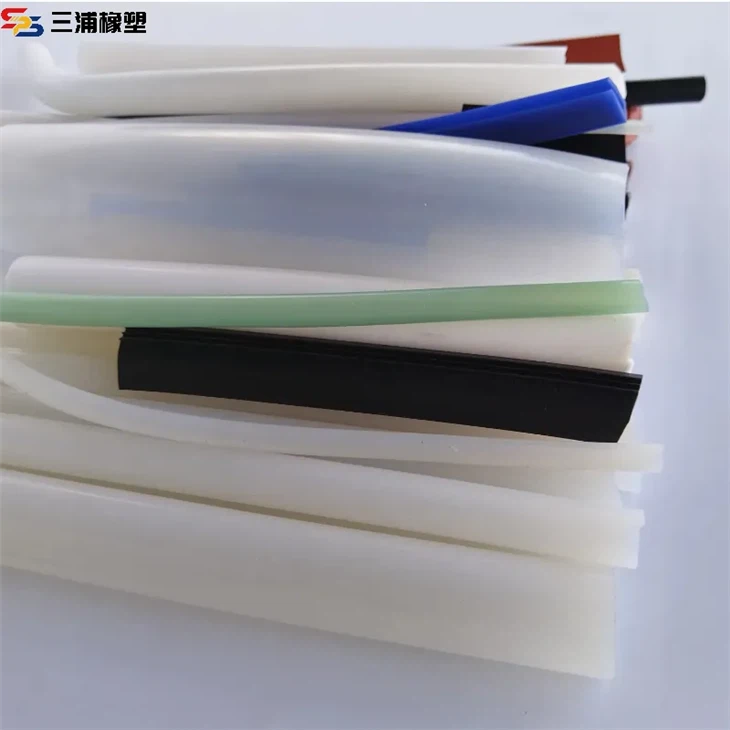
As a silicone cord supplier, one of the most frequently asked questions I encounter is whether silicone cord is UV - resistant. This question is crucial for many applications, especially those where the silicone cord will be exposed to sunlight over extended periods. In this blog post, I'll delve into the science behind silicone's UV resistance, explore its implications for various industries, and share insights based on our experience as a Silicone Rubber Profiles Manufacturer.
Understanding UV Radiation and Its Effects
Ultraviolet (UV) radiation is a part of the electromagnetic spectrum emitted by the sun. It is divided into three types: UVA, UVB, and UVC. UVC is mostly absorbed by the Earth's atmosphere, but UVA and UVB can reach the surface and cause damage to various materials. When materials are exposed to UV radiation, they can undergo a process called photodegradation. This involves the breaking of chemical bonds within the material, leading to changes in its physical and chemical properties. Symptoms of photodegradation include discoloration, cracking, loss of flexibility, and reduced strength.
The Science of Silicone's UV Resistance
Silicone is a synthetic polymer composed of silicon, oxygen, carbon, and hydrogen. Its unique chemical structure gives it inherent resistance to UV radiation. The silicon - oxygen (Si - O) bonds in silicone are very strong, with a high bond energy. This means that they are less likely to be broken by the energy carried by UV photons compared to the carbon - carbon (C - C) or carbon - hydrogen (C - H) bonds found in many other polymers.
In addition to the strong Si - O bonds, silicone also has a relatively stable molecular structure. The methyl groups attached to the silicon atoms in silicone act as a shield, protecting the Si - O backbone from direct exposure to UV radiation. This shielding effect further enhances silicone's ability to withstand the damaging effects of UV light.
Testing and Evidence of Silicone's UV Resistance
Numerous laboratory tests and real - world applications have demonstrated silicone's excellent UV resistance. In accelerated weathering tests, silicone samples are exposed to high - intensity UV light for extended periods, simulating years of outdoor exposure in a relatively short time. These tests typically show that silicone cords maintain their physical properties, such as flexibility and strength, for much longer compared to other materials.
For example, in a study where silicone cords and rubber cords were exposed to UV light for 1000 hours, the rubber cords showed significant cracking and discoloration, while the silicone cords remained largely intact with only minor surface changes. In outdoor applications, such as in roofing systems, automotive seals, and outdoor electrical insulation, silicone cords have been observed to perform well over many years of continuous sunlight exposure.
Applications Benefiting from Silicone's UV Resistance
The UV resistance of silicone cords makes them suitable for a wide range of outdoor applications.
Construction Industry
In construction, silicone cords are used for sealing windows, doors, and roofing systems. These applications require materials that can withstand long - term exposure to sunlight without deteriorating. Silicone cords provide a reliable seal, preventing water ingress and air leakage, even after years of exposure to UV radiation. They also maintain their elasticity, ensuring a tight fit and reducing the need for frequent replacements.

Automotive Industry
Automotive manufacturers use silicone cords for gaskets, seals, and hoses. These components are often exposed to sunlight when the vehicle is parked outdoors. The UV resistance of silicone ensures that these parts do not crack or lose their sealing properties over time, which is essential for maintaining the performance and safety of the vehicle.
Solar Energy Industry
In the solar energy sector, silicone cords are used in the installation and maintenance of solar panels. They are used to seal the edges of solar panels, protecting them from moisture and dust. Since solar panels are constantly exposed to sunlight, the UV resistance of silicone cords is crucial for ensuring the long - term reliability and efficiency of the solar energy system.
Limitations and Considerations
While silicone has excellent UV resistance, it is not completely immune to the effects of UV radiation. Over extremely long periods of exposure, some minor surface changes may occur, such as a slight yellowing or a very thin layer of surface oxidation. However, these changes are usually cosmetic and do not significantly affect the performance of the silicone cord.
The quality of the silicone and the presence of additives can also influence its UV resistance. High - quality silicone formulations with proper stabilizers and antioxidants will generally have better UV resistance than lower - quality products. It's important to choose silicone cords from a reputable Silicone Profiles & Cords supplier to ensure the best performance.
Comparing Silicone with Other Materials
When compared to other materials commonly used in outdoor applications, silicone clearly has an edge in terms of UV resistance. For example, natural rubber and many thermoplastics are highly susceptible to UV degradation. They can quickly lose their physical properties when exposed to sunlight, leading to premature failure. PVC, another widely used material, also has limited UV resistance and may require the addition of UV stabilizers to improve its performance outdoors.
Our Experience as a Silicone Cord Supplier
As a Silicone Cord supplier, we have seen firsthand the benefits of silicone's UV resistance in various customer applications. Our customers in the construction, automotive, and renewable energy industries have reported high satisfaction with the performance of our silicone cords in outdoor environments. We have also worked closely with research institutions to continuously improve the UV resistance of our products through the development of new formulations and manufacturing processes.
Conclusion and Call to Action
In conclusion, silicone cord is highly UV - resistant due to its unique chemical structure and strong Si - O bonds. This makes it an ideal choice for a wide range of outdoor applications where long - term exposure to sunlight is expected. Whether you are in the construction, automotive, or solar energy industry, choosing silicone cords can help you avoid the costly problems associated with UV - induced degradation.
If you are looking for high - quality, UV - resistant silicone cords for your project, we would be delighted to assist you. Our team of experts can provide you with detailed product information, technical support, and customized solutions to meet your specific requirements. Contact us today to start a discussion about your silicone cord needs and explore how our products can enhance the performance and longevity of your applications.
References
- ASTM International. (Year). Standard test methods for evaluating the weathering resistance of plastics. ASTM D4329.
- Smith, J. (Year). The chemistry and properties of silicone polymers. Polymer Science Journal.
- Johnson, R. (Year). Outdoor performance of elastomeric materials. Rubber Technology Review.